
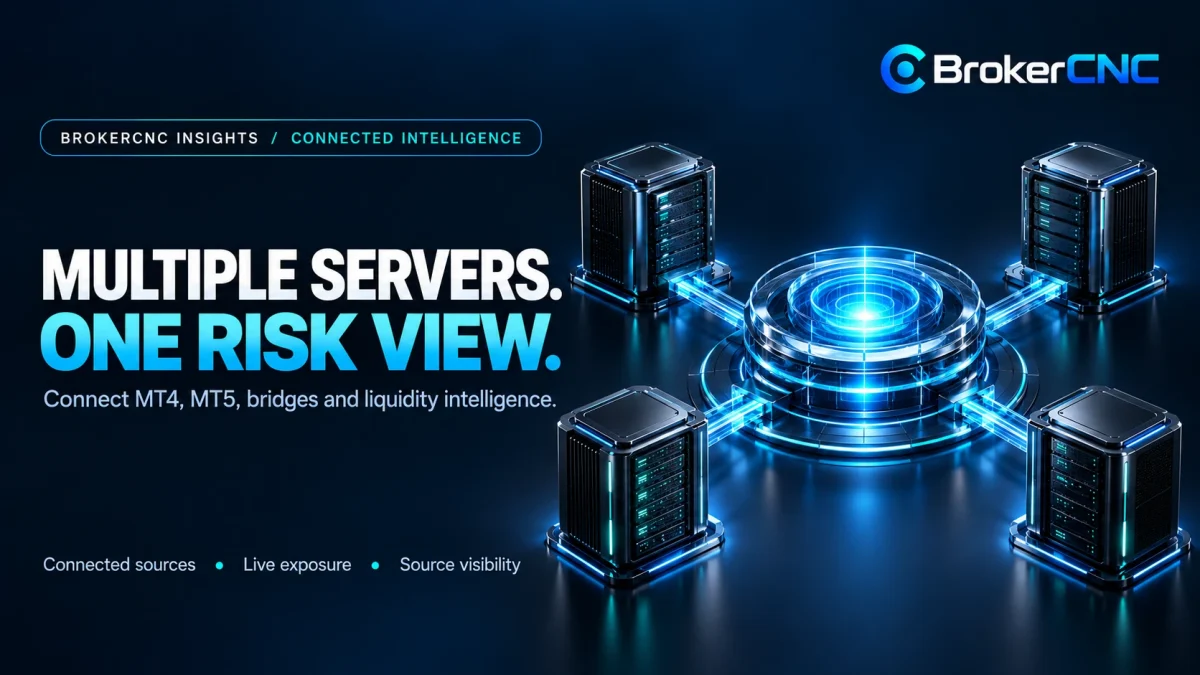
Multi-server MT4 and MT5 risk management is the problem of bringing separate trading environments into one dependable brokerage view. Consolidation should help the dealing team identify exposure and investigate its source without losing the server, account or instrument context behind a total.
Simply adding server dashboards together is not enough. Similar account numbers can refer to different clients, symbol names can hide different specifications, and one source can stop updating while the rest remain active. A connected operating picture starts with rules for identity, calculation and freshness.
Map the sources and what each can prove
List the trading servers, bridges and liquidity connections required by the review. For each source, document the records it contributes, its identifiers and its expected update behaviour. Separate configuration data from actual trading and execution events.
A server record can describe client activity, while a bridge or liquidity execution record provides another part of the routing picture. A configured A-Book label alone does not establish that a corresponding external fill completed. Preserve unmatched records as visible exceptions.
Use server-aware account and trade identities
Treat a login as unique within its source environment rather than assuming it is unique across the brokerage. Preserve the server name or stable server identifier alongside the account, order and position identifiers used in investigations.
Keep identity matching separate from linked-account analysis. Two accounts can be related through evidence without being the same account. Combining them into one record too early can erase the very relationship an investigator needs to inspect. The linked-account guide explains how infrastructure and behaviour can be reviewed together.
Normalise instruments while preserving contract context
Map symbol aliases and suffixes into useful reporting groups, but retain the original source symbol. Confirm contract size, valuation basis and reporting currency before aggregating exposure. Raw lots across unrelated instruments do not form a common risk measure.
Do not use margin as a substitute for brokerage exposure. MetaQuotes describes several instrument-dependent margin calculations. Your consolidated risk view should explain its own notional and exposure definitions instead of assuming every source figure means the same thing.
If two servers use similar gold symbols, confirm their contract specifications before grouping them. Preserve the original symbol and server in the drilldown so a reviewer can explain the consolidated exposure and find a mapping error.
Make source freshness part of the dashboard
Display when each source last updated and which reporting period a snapshot covers. An unchanged value can mean there were no new trades, or it can mean the connection failed. Those states should be distinguishable without a separate technical investigation.
Define how reconnects, delayed events and duplicate records affect totals. When one source is stale, label the consolidated view as incomplete rather than allowing a polished dashboard to imply a complete picture. Give the desk an owner and an escalation path for missing data.
Keep the path from total to trade intact
The consolidated overview should lead to symbols, books, source servers and contributing accounts. Keep the scope and perspective consistent along that path. A brokerage-wide number and an account-level client result can both be correct while describing different things.
Use the same definitions in live monitoring and scheduled reports. Document whether external hedges and manual adjustments are included, and how allocation changes are handled. The real-time exposure monitoring guide provides a framework for concentration, policy limits and account drilldown.
Validate the view in stages
Start with known snapshots for one source, then reconcile an additional environment before enabling the full consolidated view. Include a case with an unmatched execution, a stale source and a symbol-mapping difference. These tests reveal more than a demonstration in which every connection is healthy.
- Reconcile account and trade counts within a defined period.
- Compare symbol-level totals using documented calculations.
- Check book allocation against actual execution records.
- Verify the treatment of duplicate or late events.
- Confirm that the source behind every material figure is accessible.
The BrokerCNC connected infrastructure demo shows MT4/MT5 servers, bridges and liquidity context coming together in one brokerage intelligence layer. Use the risk management guide to define the decisions that view should support, then arrange a demo around your server setup.
Common multi-server monitoring questions
Can I aggregate identical login numbers from separate servers?
Keep their source identities separate unless a verified mapping says otherwise. A matching number alone is not evidence that the records belong to the same account.
What should happen when one server stops updating?
The affected source and consolidated totals should be visibly marked as stale or incomplete, with a defined process for investigation and recovery.
See the workflow in BrokerCNC.
Explore the platform with our team and discuss your MT4/MT5 servers, books and operating priorities.
Book a Live Demo →