Forex broker risk management starts with knowing what the brokerage is exposed to, where that exposure comes from and who can respond. A balance report or a list of profitable accounts cannot answer those questions on its own. The dealing team needs a connected view of positions, book allocation, execution and the relationships between accounts.
This guide sets out an operational framework for MT4 and MT5 brokerages. The aim is to make the daily risk review more consistent and easier to investigate, from the first overview to the underlying trade.
Start with a shared risk picture
Agree on the perspective of every figure before discussing limits. Client net exposure, broker warehoused exposure and external hedges describe different things. A client buy position can create an opposite market obligation for a broker retaining that risk, while a corresponding external hedge changes the combined exposure.
Document the scope, currency, valuation timestamp and sign convention on each view. Separate open-position risk from realised results, and show how fresh the data is. A number that has stopped updating should be visibly different from a current snapshot.
Monitor exposure at several levels
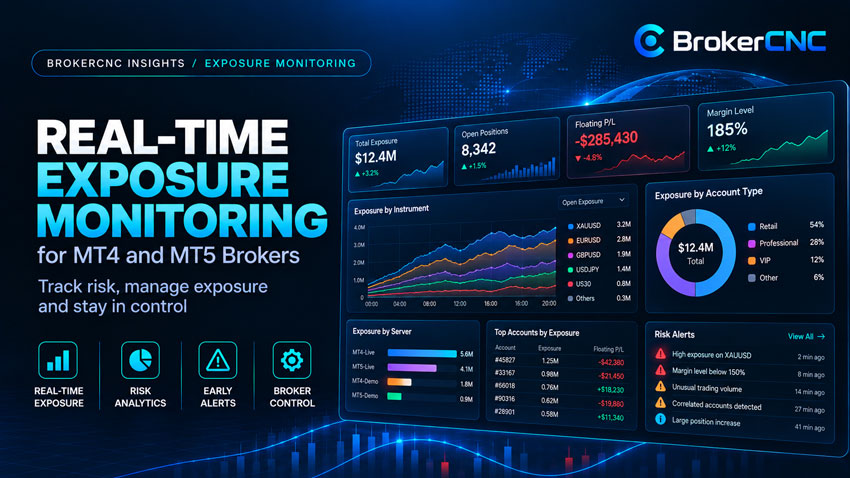
A useful overview brings together gross exposure, directional net exposure, concentration by symbol and the accounts contributing most to the result. Gross exposure helps reveal the size of the book even when opposing positions reduce the net figure. Concentration explains how dependent the book is on a small number of instruments or accounts.
A book holds $4 million of long notional and $3.5 million of short notional in the same instrument. Its gross notional is $7.5 million and its signed net is $0.5 million long. Neither figure alone describes execution costs, liquidity constraints or the distribution across accounts.
Group instruments consistently, but retain the original server symbol. Different suffixes can represent different contract settings. Converting everything into a reporting currency requires a stated rate and time; summing raw lots across unrelated instruments does not produce a meaningful risk total.
Connect book allocation to execution
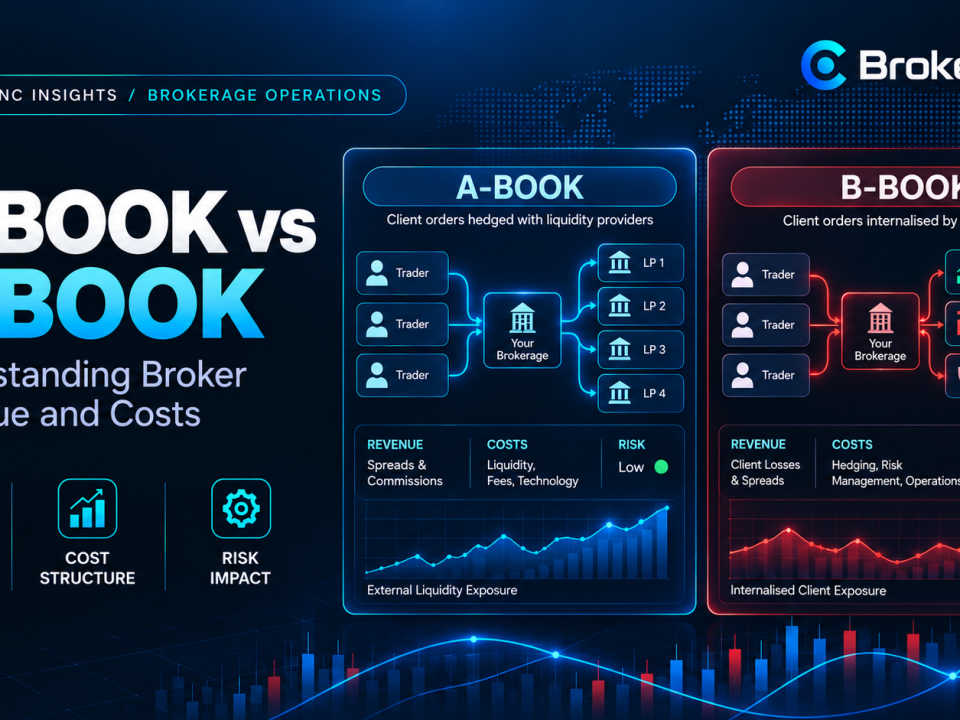
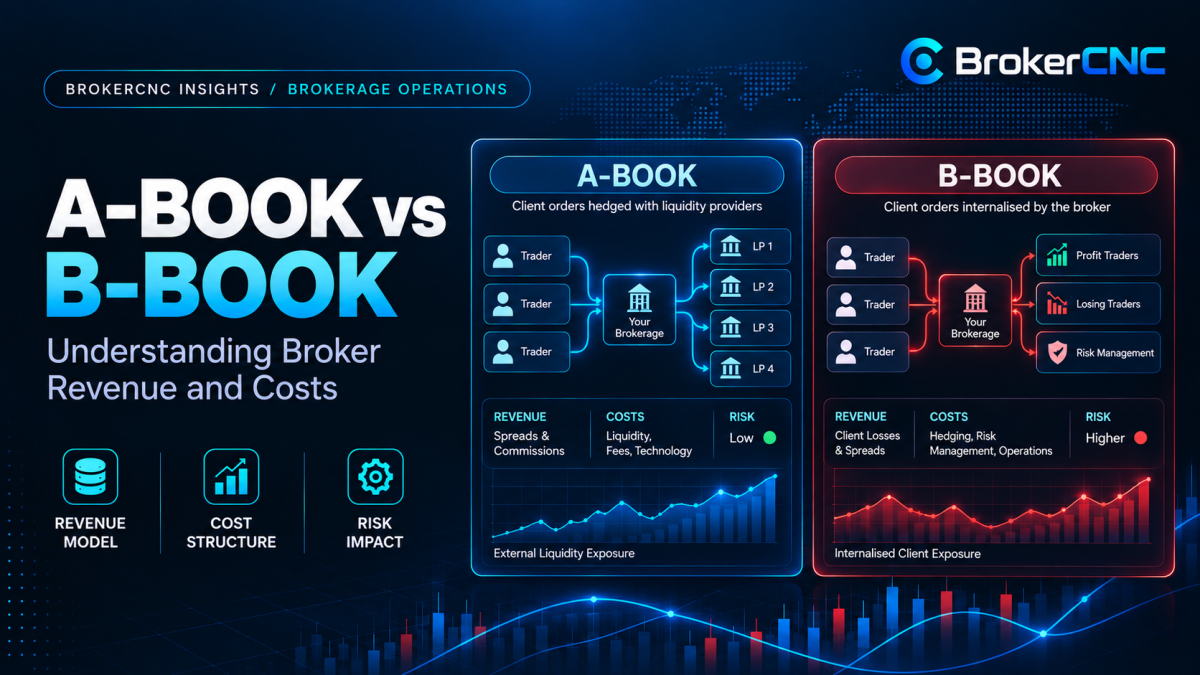
A-Book and B-Book labels are useful only when their operational meaning is clear. Review the allocation that applied when a trade occurred, any subsequent transfers and the external execution records supporting the hedge. A current account label cannot describe every historical trade.
Keep server records and bridge records linked wherever matching identifiers are available. Investigate missing legs and discrepancies as data-quality exceptions. Avoid treating a configured routing instruction as proof that an external execution completed.
Add trading behaviour to the review
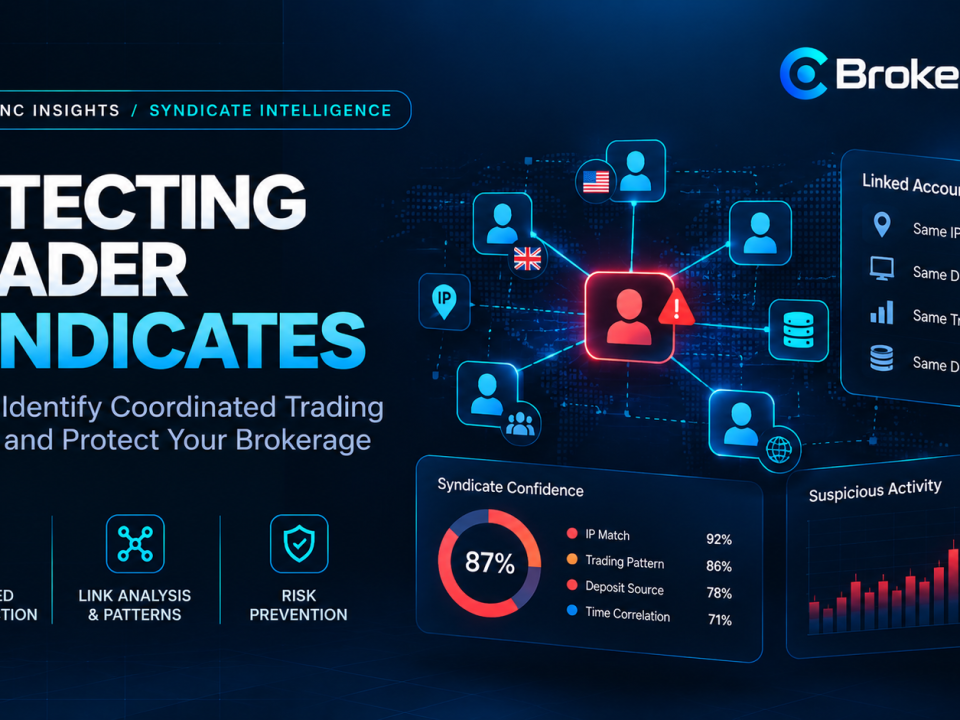
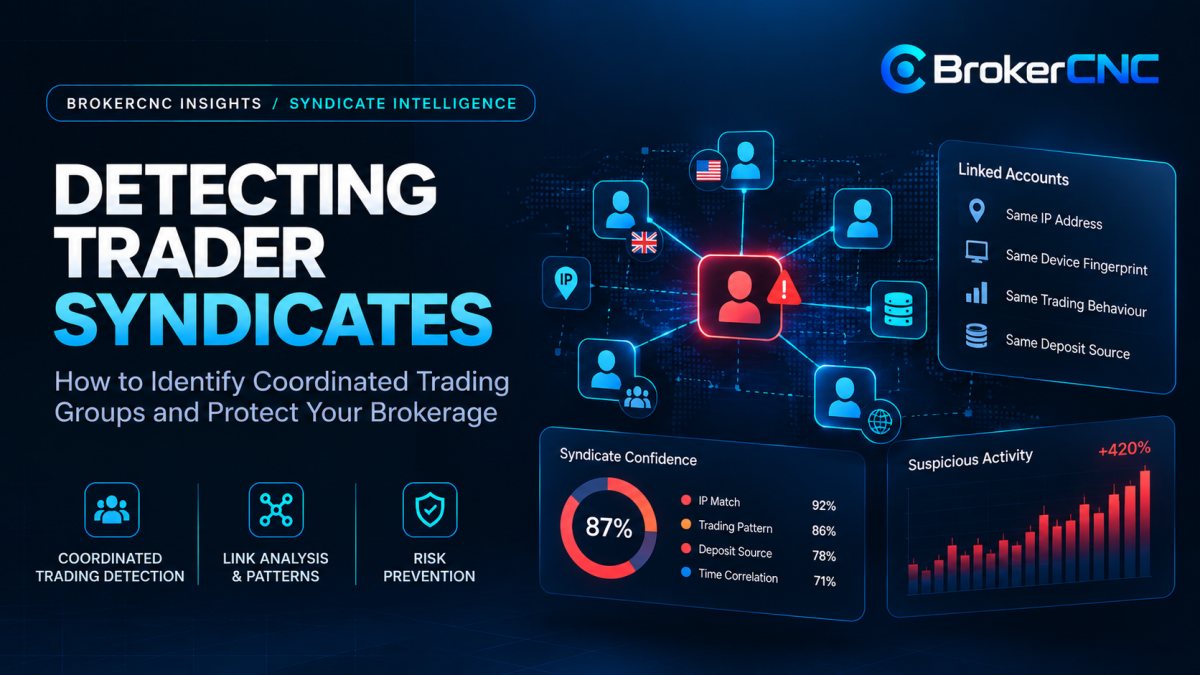
Exposure becomes more informative when combined with account activity. Repeated bursts of related trades, unusual execution outcomes or shared infrastructure can explain why a concentration has emerged. These are investigation signals; the evidence and surrounding context determine what they mean.
Review patterns over comparable time windows. A short-term strategy, automated trading or a profitable account does not establish misconduct. The desk should be able to move from an alert to its contributing accounts and trades without rebuilding the analysis manually.
Turn observations into an operating workflow
Define who owns each alert, what evidence they review and how the outcome is recorded. Specify thresholds at the appropriate scope: a whole book, a symbol or a defined group. Include recovery conditions so the system can distinguish an ongoing breach from an exposure that has returned within limits.
- At the start of the session, confirm source connectivity and unresolved exceptions.
- During the session, review concentration, changes in allocation and material activity signals.
- At handover, record decisions, outstanding alerts and the relevant snapshot times.
- At reconciliation, compare the operating view with the underlying trade and cost records.
Evaluate software through an actual investigation
Ask a provider to demonstrate a complete path: identify a growing exposure, open the contributing accounts, inspect allocation and review the policy behind an alert. Then check whether the same records support a revenue review and a repeatable report.
For MT5, orders, deals and positions are distinct records, and a position can involve multiple deals. That distinction matters when designing reconciliation and drilldown workflows. MetaQuotes explains the relationships in its trading-operation documentation.
BrokerCNC connects trading-server and bridge context across exposure monitoring, account investigation and book attribution. Explore the exposure monitoring demo and the connected infrastructure demo to see how those views fit together.
See the workflow in BrokerCNC.
Explore the product demo, then discuss your servers, routing and brokerage priorities with our team.
Book a Live Demo →